
 Español
 Portugues
 简体中文
简体中文 Pусский

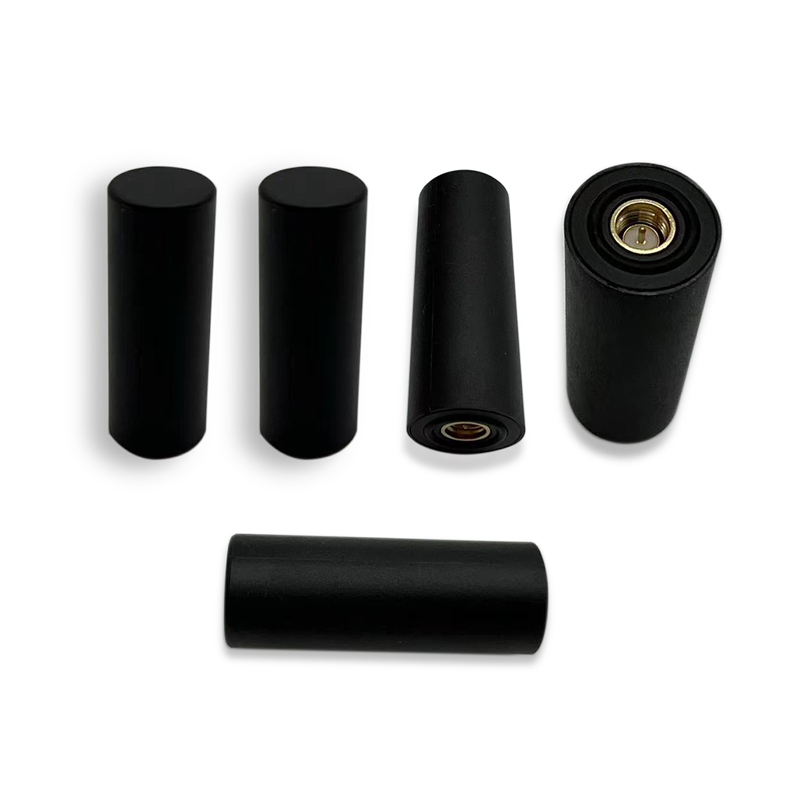
The size and shape of the antenna are important because these characteristics determine the ability of the antenna to acquire weak GPS signals. Depending on the need, the antenna can be designed to operate on a single L1 frequency or on both L1 and L2 frequencies. Since GPS signals are circularly polarized waves, all GPS antennas operate in a circularly polarized manner. In spite of the diverse constraints, many different antenna types exist, such as monopolar, dipolar, spiral, quad-arm spiral, and microstrip antennas.
The four-arm spiral antenna consists of four specific curved metal lines. It does not require any grounding. It has the characteristics of a Zapper antenna as well as a vertical antenna. This ingenious structure allows the antenna to have 3dB gain in any direction, increasing the satellite signal reception time.
The four-armed spiral antenna has a full 360 degree reception capability, so when combined with a PDA (Pocket PC), the four-armed spiral antenna can receive regardless of the placement of the PDA, unlike the flat GPS antenna which needs to be placed flat for better reception. With this antenna, when the satellite appears 10 degrees above the ground level, the signal transmitted by the satellite can be received. However, if there are many interference sources near the ground receiving station, the four-armed spiral antenna is not applicable because the four-armed spiral antenna has horizontal gain, which will amplify the noise and interfere with the reception of satellite signals.
But technology is advancing, and now the four-armed spiral antenna can break through the limitations of many traditional antennas. The smaller the Near-Field is, the less interference will be caused by the human body when the user holds the GPS device.
In addition, the current four-arm spiral GPS antenna features a complete Barron circuit (design, this design can isolate the noise around the antenna), so it can allow various functions of the antenna to coexist in a very small space without interfering with each other. For the integration of increasingly diverse functions, and the emphasis on thin and short handheld electronics, the importance of this feature can not be overstated.


